Genius food hack

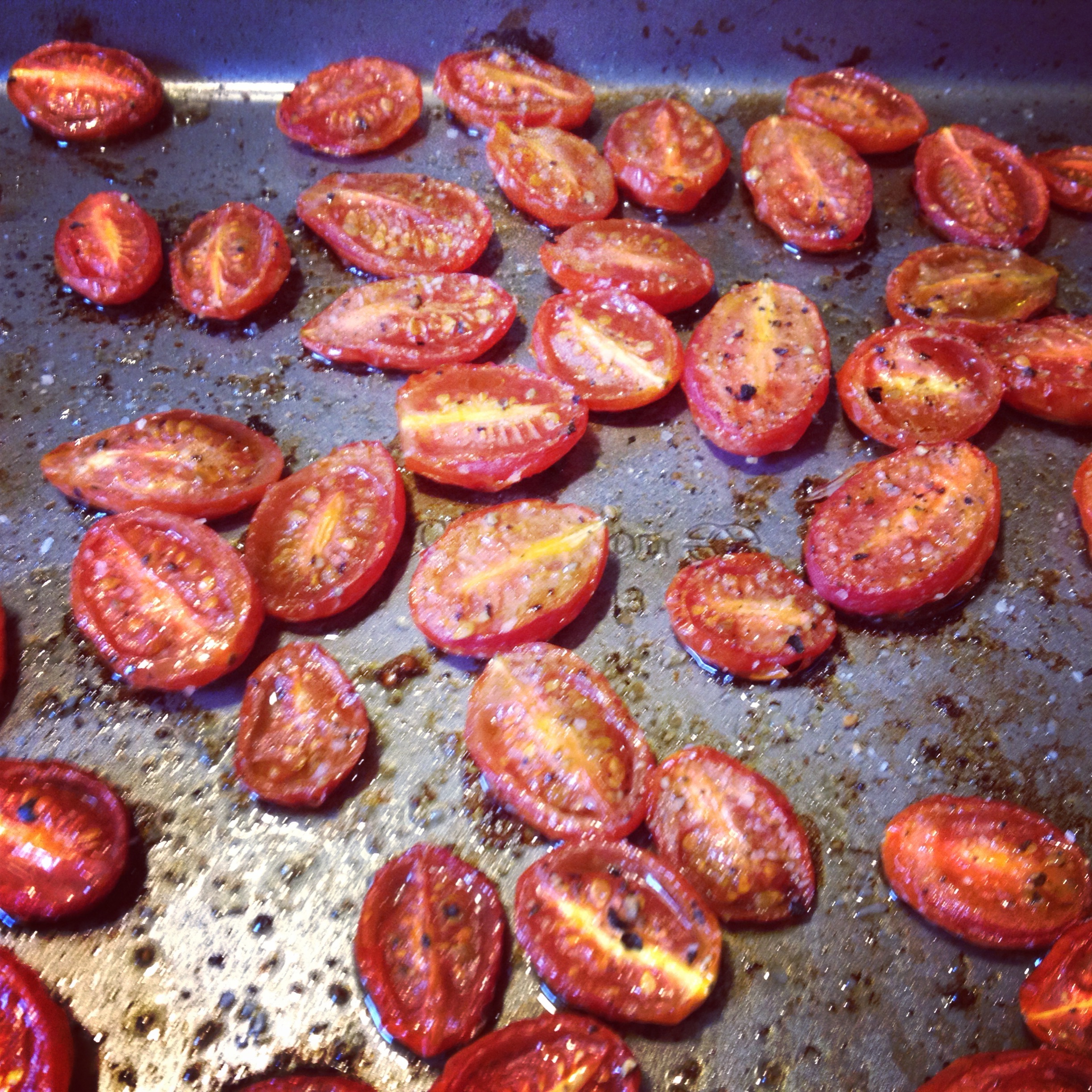
I saw this video on another blog I read and had to share this.  If you try this at home, be sure your knife is nice and sharp, otherwise you’ll be left with half-sliced, banged-up tomatoes.  And, after you slice all those teenie-tiny tomatoes, may I suggest you roast them in the oven and serve them on a toasted baguette slice with some fresh basil.  It’s the perfect snack (or appetizer) anytime of the year.

RoastedCherryTomatoes2

Roasted Cherry Tomatoes //

Cherry tomatoes
Olive oil
Kosher salt
Freshly ground black pepper

Preheat oven to 400 degrees F.  Toss the sliced tomatoes in olive oil on a sheet pan.  Generously sprinkle with salt and pepper.  Roast in the oven for 15-20 minutes until soft and tender.  Serve as a side dish (great with grilled meats) or on toasted baguette slices with some fresh basil and additional olive oil.

My favorite budget-friendly Italian wine

CentineWineBottle

I’m not a sommelier, but I drink a lot of wine.  Fun fact: on our trip to Italy last year, I drank so much Brunello di Montalcino that I broke out into hives.  Because I frequently enjoy a glass of wine or two with dinner, I tend to stick with “budget-friendly” wines (generally $8-12).  I’ve uncorked a lot of bottles at this price point and have identified one versatile, food-friendly standout:

Banfi Centine, Red blend, Toscana, Italy, 2012 // $10.99 in PA liquor stores

A blend of 60% Sangiovese, 20% Cabernet Sauvignon, and 20% Merlot, sourced from the picture-perfect hillside vineyards of Tuscany, this red wine is substantial for the price.  Old World in style, this savory, complex wine boasts notes of dark cherry, spices, savory cured meats and dried herbs.  Pairs perfectly with meats and aged cheeses.  Great for sharing with friends or enjoying with mid-week leftovers.

What’s your favorite budget-friendly red wine?

Cheers!

You’ve been ordering (and eating) sushi all wrong

sushichef
Photo by Greg Williams via flickr

My sister brought this topic to my attention.  She recently mentioned to me that she wanted to learn how to order sushi “like I just returned from a business trip to Tokyo.”  I thought that was interesting and given that I eat sushi on a very regular basis, I wondered if she was on to something.  I did some research and discovered that everything I thought I knew about sushi was wrong.

Here are 8 tips I pulled directly from a recent Thrillist article by Dan Gentile:

1. Sit at the bar
90% of a sushi chef’s work happens before the restaurant even opens. For a chef, the prep is the practice, and the service is the performance. It’s best to get a front-row seat rather than slumming it in the nosebleeds. You’ll get a stronger appreciation of the care that goes into your food, and no one has more knowledge of the menu and freshness of the fish than the chef. Also, a few friendly questions and a genuine interest will likely earn you free food.

2. Trust your server
It is their job to make sure you have a good experience, so don’t make it hard for them. If you’re feeling brave, then order “omakase” style (“I’ll leave it to you”) and let the chef make the decisions. But whether you’re ordering a la carte or letting the chef pick, offer your server suggestions of what you like in terms of texture and intensity. If you’re not into creamy, rich fish, you probably won’t want to end up with a mouthful of urchin genitals.

3. Don’t be afraid to ask questions
Odds are your server didn’t know anything about sushi when they started working in the industry, so don’t feel embarrassed if you don’t have a nuanced understanding of the difference between blue and yellowfin tuna, or don’t have three semesters worth of Japanese language classes under your kimono.

4. Don’t order everything at once
Rattling off a super-complex order of sashimi and nigiri might make you think you look like a pro, but it isn’t how pros actually do it. Order a few things at once, and your honest reactions will help guide your server to make sure you’re getting flavors that match your palate.

5. Don’t ask for soy sauce and wasabi if they’re not served
Most sushi chefs aren’t too into the idea of you giving their carefully made creations a bath in a pool of soy sauce. It overwhelms the flavors, and chances are the chef already gave it a delicate brush of soy. Wasabi and ginger are used as palate cleansers, not entrees.

6. Avoid flashy rolls
Rolls with lots of different kinds of fish or rainbow sauces are generally frowned upon by experts because it’s hard for the individual flavors to shine. The chef we talked to recommends basic tekka maki (tuna roll), umeshiso maki (a roll with plum paste and shiso leaves), or a California roll with real crab.

7. Seek out the specialties
Ask what the restaurant is known for, or if there are dishes that are particularly indicative of the restaurant’s style. It will be viewed as a sign of respect and also allow the chef to put his best foot forward.

8. When in a traditional sushi bar, sashimi should be ordered before sushi
This comes from Morimoto camp, so you know it’s ironclad. Work your way up to rolls: they’re considered the main course. And while it seems like you might want to start with a bowl of miso, traditional chefs would serve this last.

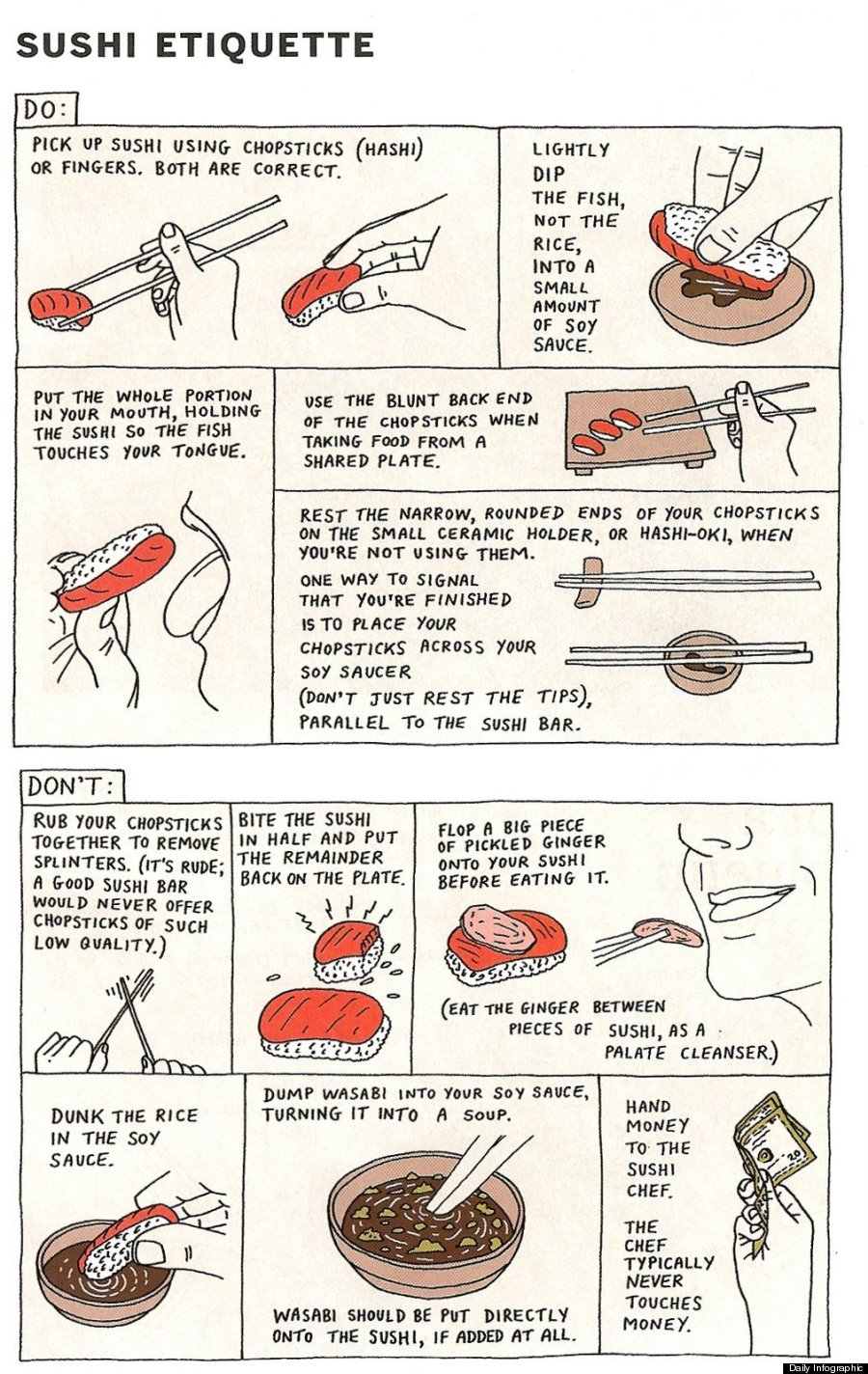
Now that you’ve figured out to how order sushi, you need to learn how to eat it.  Yup, you’ve been doing that wrong too.  Sorry to be the bearer of bad news.  Here’s an incredibly brilliant infographic from the Huffington Post to help you understand the dos and don’ts of eating sushi.

Infographic
Image pulled from the Huffington Post.  Original infographic via Visual News via Daily Infographic.

Now grab some friends, head to your favorite sushi restaurant and show off your new sushi knowledge and skills!

True story, peel a head of garlic in 10 seconds

One of my good friends recently shared this video with me…mind blown.  Roasted garlic anyone?


Keep calm and crab cake on

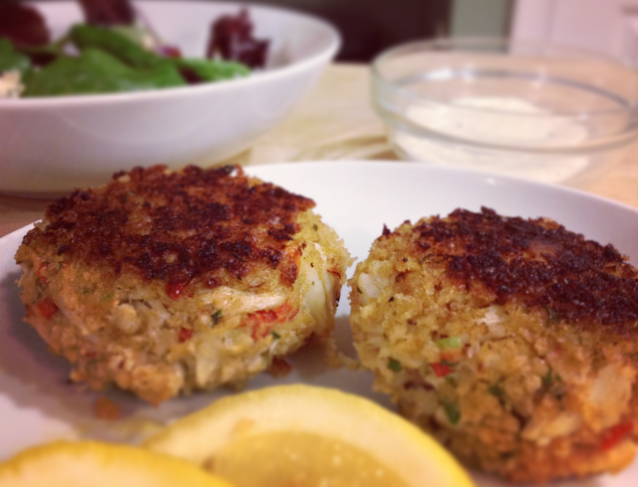
CrabCakesPlated
The weather is getting warmer which means I typically begin to cook lighter fare.  Traditionally crab cakes are probably not considered “light” in terms of calorie count, but I found a recipe that keeps them on the “healthier” side (or at least I like to tell myself so).

Who doesn’t love a good crab cake?  Personally, I think everyone should eat more crab cakes, but typically this dish is more frequently served up in restaurants rather than on your dinner table.  I hope to change that notion.  This American classic is easy to make using canned crab meat (warning: this can be pricey, but keep an eye out for when it goes on sale), a few fresh ingredients and some pantry staples.
RawIngredients
I slightly adapted this recipe from Ellie Krieger’s Crab Cake recipe.  Serve these tasty little morsels with some lemony aioli…nom, nom, nom!  Here’s how to make them.
CrabCakeMix

Ingredients //

  • 1 egg, lightly beaten
  • 2 teaspoons Dijon mustard
  • 1 teaspoon Worcestershire sauce
  • 1 tablespoon fresh lemon juice
  • Dash hot sauce  (in my case, Frank’s Red Hot)
  • 1/2 teaspoon Old Bay seasoning
  • 1/2 cup finely chopped red bell pepper
  • 1 scallion, finely chopped
  • 1 pound lump crab, picked over for cartilage
  • 3/4 cup panko bread crumbs
  • 1/4 teaspoon salt
  • Freshly ground black pepper
  • Olive oil
  • Lemon aioli (recipe follows)

Directions //
In a medium bowl mix together the egg, mustard, Worcestershire sauce, lemon juice, Old Bay and hot sauce. Stir in the bell pepper and scallion. Gently fold in the crab, 1/4 cup of the bread crumbs and salt and pepper to taste. Put the remaining bread crumbs in a shallow dish.

Divide the crab mixture into 6-8 mounds. Shape 1 mound into a round and coat in bread crumbs. Transfer to a baking sheet or plate and flatten to form a patty about 1-inch high. Repeat to form the remaining crab cakes.

Add oil to a large skillet over high heat. Add crab cakes and saute, flipping once, until golden brown and crisp, about 5 to 6 minutes per side. Serve with Lemon aioli.  Note // For a healthier version, you can bake them in a 400 degree oven until golden on the bottom, about 10 minutes.  Flip them and cook until the second side is golden, 5 to 10 minutes longer.

Lemon Aioli

Ingredients //

  • 1/2 cup mayonnaise
  • 2 cloves garlic, minced
  • 1 tablespoon chopped chives
  • 3 tablespoons lemon juice
  • 1/2 teaspoon lemon zest
  • Kosher salt and freshly ground black pepper

Directions //
Mix all ingredients together and serve.

Let me know what you think of these if you make them!  Enjoy!


It’s Friday…come on get happy (hour)

I’ll let you in on a little secret.  My husband and I have a Friday night happy hour ritual.  Not out at a trendy gastropub with lots of friends…but at a small bar in our basement (aka the “man cave”)!  It works for us.  The company is good and the drinks are cheap(er)!

I love happy hour about as much as I love Fridays.  It’s such a great, celebratory way to kick off the weekend.  The only problem is, I would never get home from work in time to participate.  That’s why about a year ago I decided to forego the mad dash to get to the bar on Friday before 7pm and start hosting happy hour at home.

Here are a few simple menu suggestions to create an at home happy hour that beats the bar!  P.S. The recipes are quick and easy too, because we all know that last thing you want to do after a grueling commute in rush hour traffic is slave away in the kitchen for an hour or two!

The Drinks:
CocktailCollage

(Photos and recipes from Martha Stewart)

Find these easy recipes here:
Beer // Lemon Shandy
Whiskey // Whiskey Lemonade
Vodka // Blackberry Crush
Rum // Pineapple-Rum Cocktail
Apéritif // Campari and Orange

The Food:
BarFoodCollage
(Photos and recipes from Martha Stewart)

Find these easy recipes here:
All-American Buffalo Chicken Tenders
Artichoke Dip
Avocado Bar
Spicy-Sweet Pretzel Mix

What’s on your happy hour menu?


Deviled eggs – what was old is new again

Easter is just around the corner and you’re probably starting to wonder what to do with all those hard-boiled eggs you just decorated.  My solution?  Devil them.

Trendy restaurants all over the country have been serving up their “foodie” version of the deviled egg for quite some time now.  Before this trend fades off into the sunset entirely, grab those brightly colored eggs from the fridge and a few pantry ingredients, and viola, you can have deviled eggs at home in no time!

I grew up eating deviled eggs at parties and family get-togethers – they were my mom’s signature party dish.  Now she’s passed the baton to me. I’ve tried a lot of adaptations of the deviled egg, but in my opinion, Betty Crocker’s deviled egg recipe from my mom’s 1969  Betty Crocker Cookbook (1st printing, hardcover edition) is my favorite.

DeviledEggs

Ingredients //
6 hard-cooked eggs, peeled
3 tablespoons mayonnaise or salad dressing (def use the mayo!)
1/2 teaspoon ground mustard
1/8 teaspoon salt
1/8 teaspoon pepper

Directions //
1.  Cut eggs lengthwise in half. Slip out yolks and mash with fork.
2.  Stir in mayonnaise, mustard, salt and pepper (I like to add-in a dash of cayenne and about of 1/4 teaspoon of Dijon mustard).
3.  Fill whites with egg yolk mixture, heaping it lightly (to keep it retro, I use my 1970’s era Salad Shooter, but you can easily use a pastry bag or a large Ziploc bag to pipe the filling into the egg).  To top them off – sprinkle a small dash of paprika on each egg.  Cover and refrigerate.  

Enjoy!